|
The Archaeological Museum
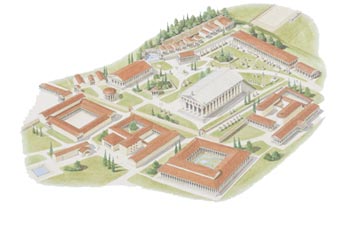
of Olympia, one of the most important museums in Greece, presents the
long history of the most celebrated sanctuary of antiquity, the
sanctuary of Zeus, father of both gods and men, where the Olympic
games were born. The museum's permanent exhibition contains finds from
the excavations in the sacred precinct of the Altis dating from
prehistoric times to the Early Christian period. Among the many
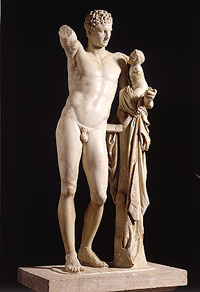
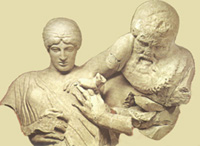
precious exhibits the sculpture collection, for which the museum is
most famous, the bronze collection, the richest collection of its type
in the world, and the large terracottas collection, are especially
noteworthy.
The museum building comprises exhibition rooms, auxiliary spaces and
storerooms. The vestibule and twelve exhibition rooms contain objects
excavated in the Altis. The auxiliary spaces (caf?, lavatories) are
located in the museum's east wing; a separate building between the
museum and the archaeological site houses a book and souvenir shop.
Finally, part of the east wing and the basement are dedicated to
storage and conservation of terracottas, bronze, stone, mosaics and
minor objects.

The Archaeological Museum
of Olympia, supervised by the Seventh Ephorate of Prehistoric and
Classical Antiquities, was reorganized in 2004 to meet modern
museological standards.
Author
Olympia Vikatou,archaeologist
|